Srinivasan Amia Does Anyone Have the Right to Sex? London Review of Books 40 No 6 (2018) 5
At Work
Sentience and Intensities: A Conversation with Maureen McLane
By 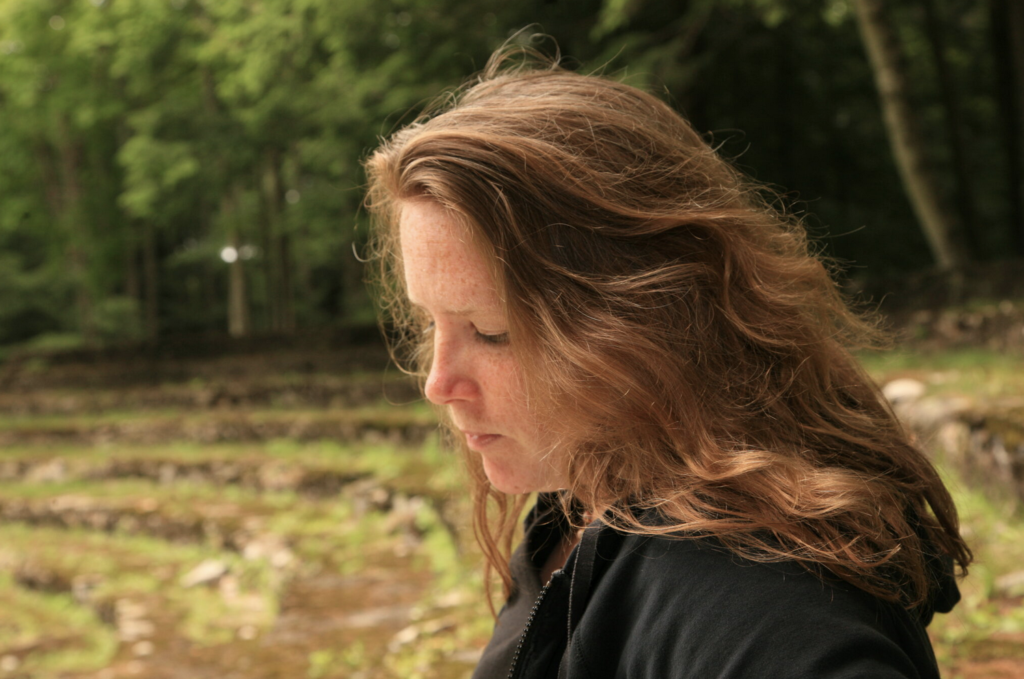
Maureen McLane. Photo courtesy of Joanna Eldredge Morrissey.
Maureen McLane's verse is deceptively good-natured. It draws you in with its smooth, meditative rhythms and genial mood but to veer into hidden channels of ambivalence, cynicism, acute sadness, and occasional hostility. Reading McLane is similar having a conversation with an erstwhile friend and being suddenly reminded that she has whole continents of experience you'll never visit, judgments (including confronting you lot) you'll never hear, and difficulties in which you'll never share. In that sense, her work is an ongoing investigation of subjectivity: information technology plays with vox and tone, perspective, and persona to create an emotional world that is at in one case intimately recognizable and treacherous, strange. Always in dialogue with a richly conceived literary history—and with figures like Dickinson, O'Hara, the Romantics, and especially Sappho—the poems speak of a human nature at once less variable and more than dynamic than we might take guessed, peculiarly when it comes to the vagaries of want both erotic and intellectual.
With the release ofMore than Anon, a drove of poems from her first five books of poetry, McLane takes us on a sort of tour of her world, a well-ordered place where things (metrical forms, marriages) yet become ofttimes awry. Her restless lyricism travels through bedrooms and classrooms, forest paths and quiet cars, searching, possibly, for a stillness that doesn't experience like paralysis, and never quite finding it. I spoke to McLane over e-mail well-nigh her human relationship to genre, "rhetorical IEDs," and what it means to write in a queer poetic tradition. Her responses were generous, learned, and—like her poetry and her own criticism, of which she'due south produced several books, including the acclaimed literary memoir My Poets—bear witness of an omnivorous sensibility that finds almost everything interesting and takes zippo for granted. Read More
At Piece of work
Allowing Things to Happen: An Interview with Tyshawn Sorey
Past Craig Morgan Teicher 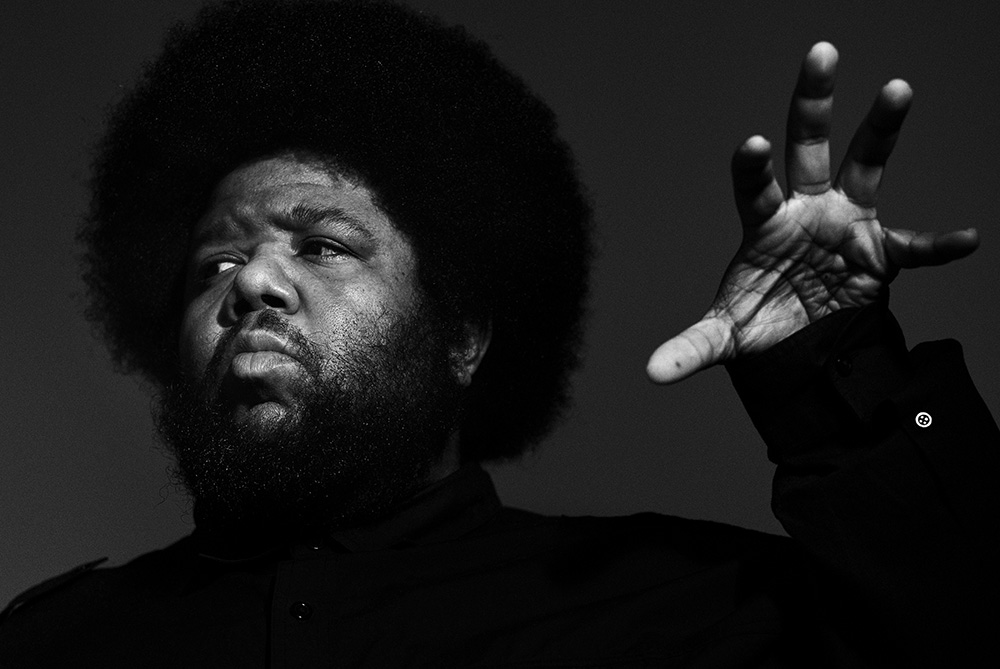
Tyshawn Sorey. Photo: Sharif Hamza.
Tyshawn Sorey is a remarkable figure in contemporary music. For the past xx years, he has been among the most highly regarded and in-demand drummers in avant-garde jazz, playing with major contemporary figures such as Steve Coleman, Kris Davis, Vijay Iyer, and Steve Lehman, too as veterans like Marilyn Crispell, Myra Melford, Roscoe Mitchell, and John Zorn. On albums like Blend, The Inner Spectrum of Variables, and Verisimilitude—the trilogy of trio records he released between 2014 and 2017—he blurs the boundaries between jazz and classical music, exploring audio textures and patches of silence as well as driving rhythms. Over the same period, Sorey, who won a MacArthur Fellowship in 2017 and teaches at the University of Pennsylvania, has been developing his oeuvre as a classical composer. Read More
At Work
A Woman and a Philosopher: An Interview with Amia Srinivasan
By Lidija Haas 
Photo: Tereza Červeňová/Morgenbladet
When Amia Srinivasan published her essay "Does Anyone Take the Right to Sexual activity?" in the London Review of Books in early 2018, several months into the public discussions surrounding #MeToo, it provoked many strong feelings—not to mention gave the world the sentence: "Sex is not a sandwich." Opening with a reading of the incel manifesto written by the perpetrator of the Isla Vista killings, it became a far-reaching meditation on the ideological, political, and public dimensions of sexual desire and how nosotros might begin to think more critically about them.
Srinivasan trained as a philosopher at Yale and then Oxford, where she has since established herself at the center of the onetime boys' guild that is analytic philosophy. In 2019, she was given the Chichele Chair in Social and Political Theory once occupied by Isaiah Berlin; she is the start adult female, the get-go person of color, and the youngest person ever to have up her post. Near readers, however, will know her for her rich and entertaining pieces in magazines like The New Yorker and the London Review, including my favorite, a 2017 paean to octopuses—"the closest nosotros can come, on earth, to knowing what it might exist like to encounter intelligent aliens." Read More
At Work
They Actually Lose: An Interview with Atticus Lish
By Matthew Shen Goodman 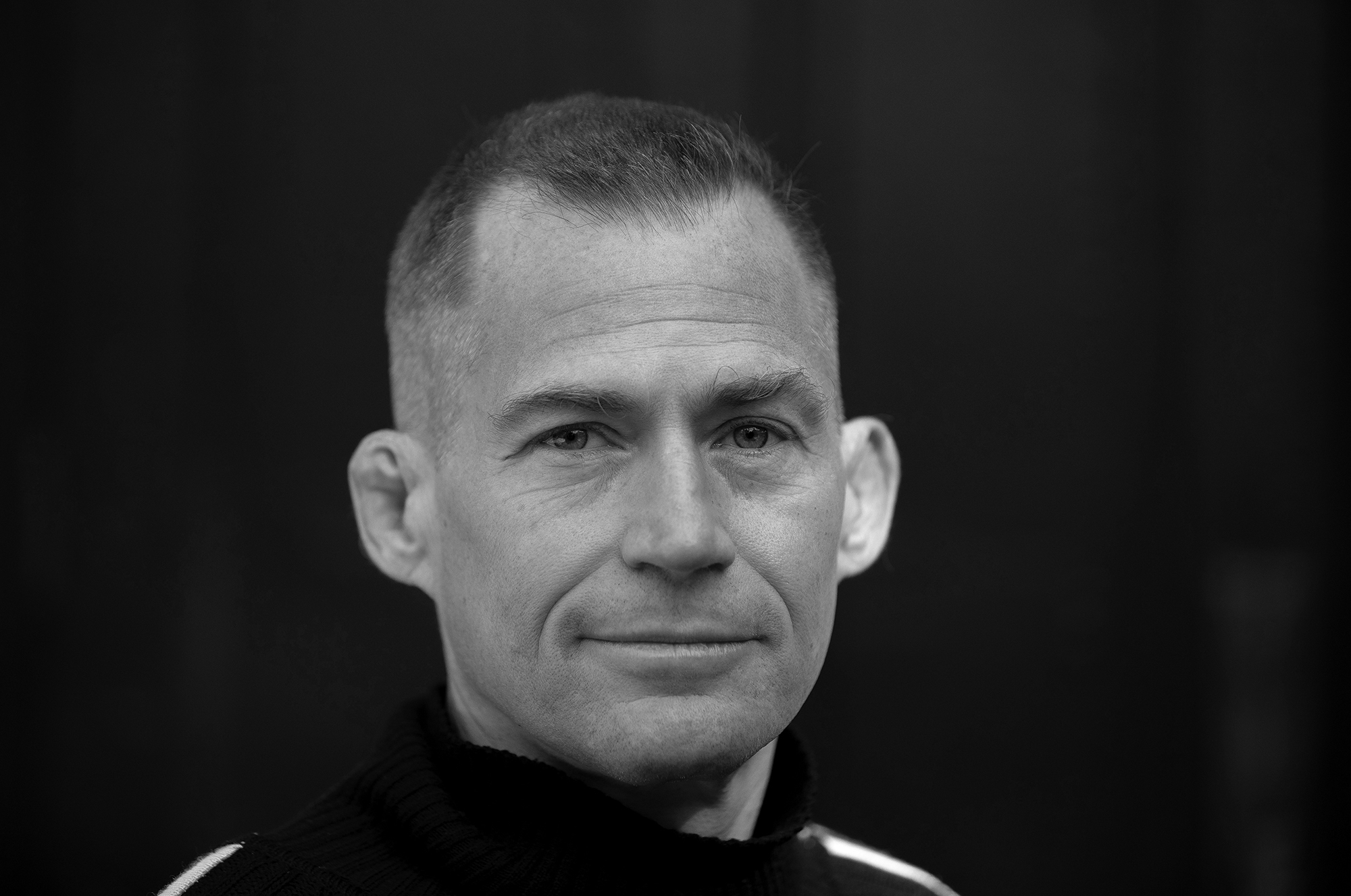
Atticus Lish in Lexington, Ky., on Lord's day, May 30, 2021. Credit: Ryan Hermens
I take recommended Atticus Lish'southward first novel to more than people than whatever other volume. Beautiful without beingness sentimental, vicious without beingness barbarous, Preparation for the Next Life (2014) is a love story between Zou Lei, an undocumented half-Uighur, half–Han Chinese woman, and Brad Skinner, an Iraq War veteran suffering from PTSD. "He gets information technology," I told fellow New Yorkers: the Jackson Heights bars; the Flushing food stalls; the long walks through outer Queens, past housing projects and storefront mosques and cash-and-carries, all the way to the gas stations and football fields of Long Island. Everyone I pestered into reading the novel was bowled over, from jaded graduate students and sore-eyed re-create editors to my mother and my grappling coach. Read More than
At Work
Freedom from Sugarcane Hell: An Interview with Vinod Busjeet
By Parul Kapur Hinzen 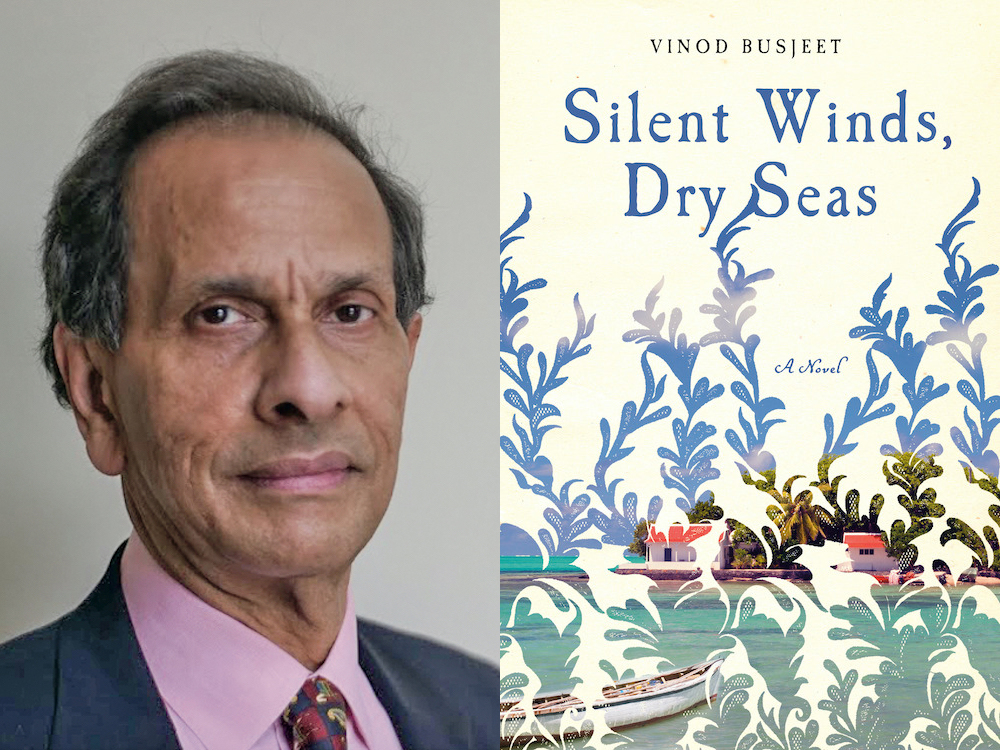
Photograph: Sushant Sehgal.
I met Vinod Busjeet a few summers ago in Denver, where several of us writers of Indian origin found ourselves together in a workshop at the Lighthouse Lit Fest. I remember thinking his elegance and erudition were impressive. Only what lingered in my heed was a detail from the work he had submitted to the form, the closing affiliate of a bildungsroman, now published as Silent Winds, Dry Seas. The protagonist, Vishnu Bhushan, takes enormous pride in his frail hands. A scholarship pupil from the island of Mauritius, off the coast of Due east Africa, he refuses a work-study job washing dishes in a Yale dining hall. Transmission labor is abhorrent to him. At first, I found his fastidiousness comical. And so I realized that Vishnu dreads working with his hands considering he fears it will demark him metaphorically to the servitude of his Indian ancestors on Mauritian sugar estates. "Sugarcane hell" is how ane of Vishnu'due south cousins, still tied to the land, describes the backbreaking labor of cut woody stalks of cane.
Busjeet's literary debut at the age of seventy-one is surprising. After leaving Republic of mauritius to report in the U.Southward., he settled in the vicinity of Washington, D.C., and worked for the private-sector arm of the Globe Bank, where he focused on developing economies. Far from the corridors of power, his fictional alter ego, Vishnu, grows up in the conflicted world of midcentury Republic of mauritius, part of a rambunctious, feuding clan rise out of poverty into pocket-size jobs. Descended from indentured laborers, they live in scruffy neighborhoods amid the Creole descendants of enslaved people, escape into drink and the comfort of Hindu rituals, pinning their hopes on their children winning scholarships to study abroad.
Unfortunately, lilliputian fiction has been produced in English about Indian communities rooted in indenture, though V. Due south. Naipaul's brilliant early novels of Trinidad stand out. The British devised this shadow form of slavery immediately after abolishing the African slave merchandise in 1833, in order to continue reaping profits from their plantations all over the world. More than than a million dispossessed Indian villagers were shipped out to far-flung sugar colonies. Overwork and concrete corruption bedridden the lives of these men and women. Nearly half a million indentured workers landed in Mauritius, laboring for French Mauritian and British planters whose greed transformed the island into the world's biggest saccharide factory for a time. Busjeet'south novel offers a rare view of the society that evolved from this brutish system.
In May and June, Busjeet and I spoke by telephone and exchanged emails nearly what it takes to reconstruct a faraway childhood, laugh off old hurting, and reckon with the nighttime legacy of colonialism.
INTERVIEWER
Yous turned to writing later a long career in development cyberbanking. Did yous ever think near condign a author early on?
BUSJEET
In Mauritius, writing was the last thing you'd think of doing. I went to what is considered the best high school at that place, Royal Higher, but I don't recall anyone talking nigh embracing writing as a career. My begetter was literate—he knew Shakespeare—but my mother was basically illiterate. She had only two years of chief school. And so, in her one-time age, she started learning to read and write Hindi. The orientation was making a living, you know? If you lot were Franco-Mauritian, the globe of business organisation was yours. The Hindus, Muslims, and Creoles went into the liberal professions—doctor, engineer, lawyer. Writing was a kind of luxury. About people I knew didn't read for pleasure. They read for exams, and in one case exams were over, they didn't read. The top author in Mauritius at the time was a guy called Malcolm de Chazal. He was regarded as a madman. Read More
At Piece of work
Poetry Is Doing Great: An Interview with Kaveh Akbar
By Craig Morgan Teicher 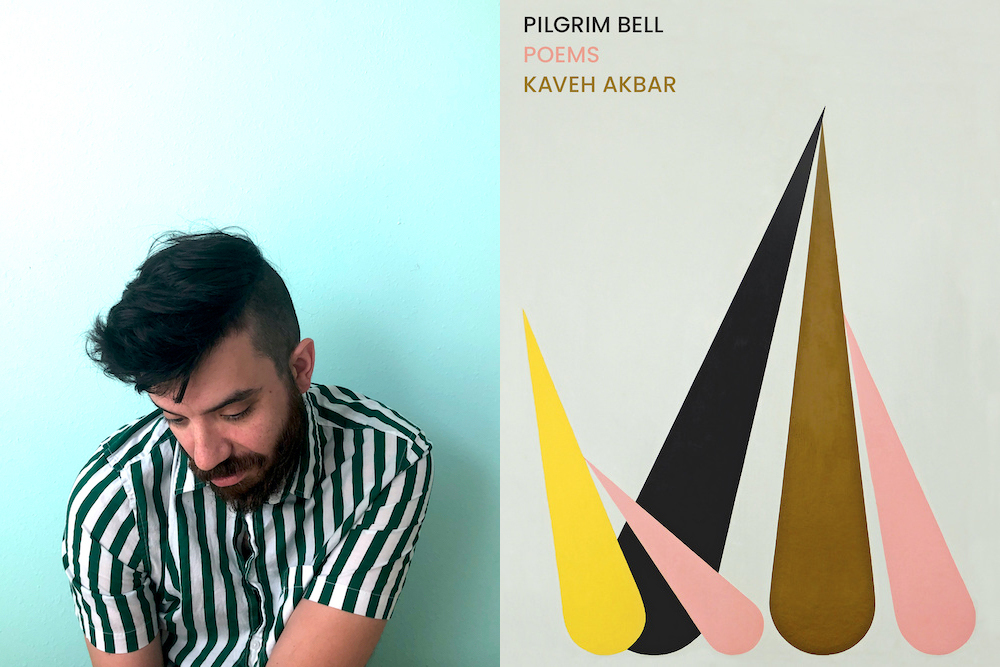
Photo: Paige Lewis. Courtesy of Graywolf Press.
Enthusiasm is at the middle of Kaveh Akbar's literary endeavor. Since the publication of his 2017 debut drove, Calling a Wolf a Wolf, a hyperspeed, ultrasensory journey through addiction, recovery, and spirituality, he's become ane of the best-known poets in America, and that'southward saying something in this moment when poetry is suddenly, somehow, absurd. But before that, Akbar was already a tremendous presence—a prototypical online influencer, sharing pictures of pages from other poets' books with his many followers, spreading the gospel far and wide. Calling a Wolf a Wolf was a phenomenon, reaching thousands of readers, many of whom discovered and fell in love with poetry through their feeds. Though Akbar has since left social media, he remains an advocate through his piece of work as poetry editor of The Nation. When I spoke to him over Zoom, he was at an artists' residency at Civitella, in Italia, and despite the distance and shaky net connectedness, we gabbed about the life-or-death practice of poetry similar the pair of gleeful nerds we are.
Akbar's 2nd collection, Pilgrim Bell, feels less frantic than his first, though no less intense. In that location's lots of white space on the page, and the poems are oftentimes cutting into brusk, staccato sections, sentence fragments that accumulate emotional power simply avoid straightforward narrative or confession. The poems deal with family, religion, honey, the wreckage of Trump's America, and daily life in the highly pressurized surroundings of the past few years. They feel profoundly intimate to me, every bit if they seek to reclaim the nuanced language of inner life from all the public noise that threatens information technology. Reading Akbar's work and talking with him was a welcome reminder that this art form is soul-sustaining and worth building a life around.
INTERVIEWER
Permit's first with the thought of poetry as a practice. Is it something you feel you need to do regularly?
AKBAR
Yeah, I mean it's never off. Everything that enters my consciousness enters first through the prism of its poetic utility. Were you ever a kid who would agree your shirt out similar—I don't know if you can see it—like this, and you would fill it with stones or shells or any? I experience like I'm just moving through the globe with my shirt out in front of me, filling it with language and images. And over the years I've realized that ane hundred thousand per centum of the time, if I'1000 like, "I'll recall this, I don't need to write information technology down," I forget it instantaneously. So I just write everything down.
Read More
mitchellobace1984.blogspot.com
Source: https://www.theparisreview.org/blog/at-work/page/2/
0 Response to "Srinivasan Amia Does Anyone Have the Right to Sex? London Review of Books 40 No 6 (2018) 5"
Post a Comment